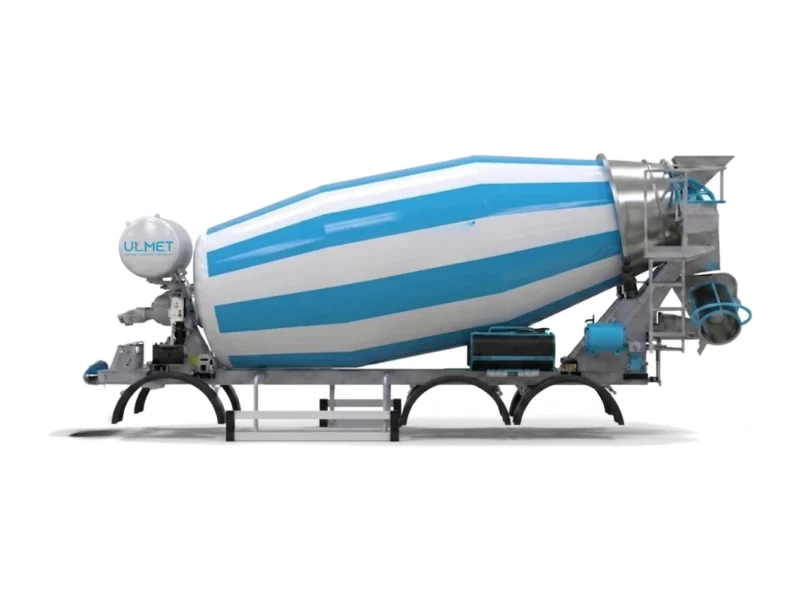

Anyone who runs truck mixers knows this: same vehicle, same road, same concrete, but two different drivers. In one truck the gearbox runs trouble-free for years; in the other, rollers and blades tire much sooner. A large part of the difference comes down to how the drum is turned.
The drum does not only carry concrete; it keeps it uniform and discharges it in a controlled way on site. Each of these three jobs calls for a different way of working.
1. Loading: follow the plant’s rhythm
During loading the drum turns in the loading direction, following the plant operator’s signal. Keeping the speed steady while filling helps the concrete settle evenly at the back of the drum. A clean loading hopper matters as much as the drum; concrete built up in the hopper slows loading and causes spills.
2. On the road: low speed, constant movement
On the road the aim is not to mix but to keep the concrete uniform. The drum turns in the mixing direction at a low speed that keeps the concrete from setting. More speed than needed means more fuel, more heat and more wear on the gearbox and rollers. Stopping the drum during long waits in traffic can cause the concrete to settle and segregate.
3. Discharge: stop first, then reverse
Reversing the drum while it is still turning creates one of the heaviest shocks in the system. Stop the drum first, then switch to discharge. Increase the discharge speed gradually to suit the chute or the pump hopper; an overflowing pump hopper is both waste and a safety risk.
Common mistakes
- Reversing the drum while it is turning
- Stopping the drum completely while waiting
- Spinning an empty drum at high speed for long periods
- Leaving the drum unwashed after discharge
These habits put particular strain on the gearbox and drive and the drum rollers. Worn drum blades also reduce mixing and discharge quality over time; we cover this in detail in when to replace a drum.
Correct use, longer life
Using the drum correctly costs nothing extra; it only takes attention. A short reminder for your drivers can make a difference to the list of parts replaced at the end of the year. When a part does need replacing, write to us about our drum and mixer and gearbox products.
Note: Speeds and times vary by vehicle and mixer body; follow your manufacturer’s instructions.