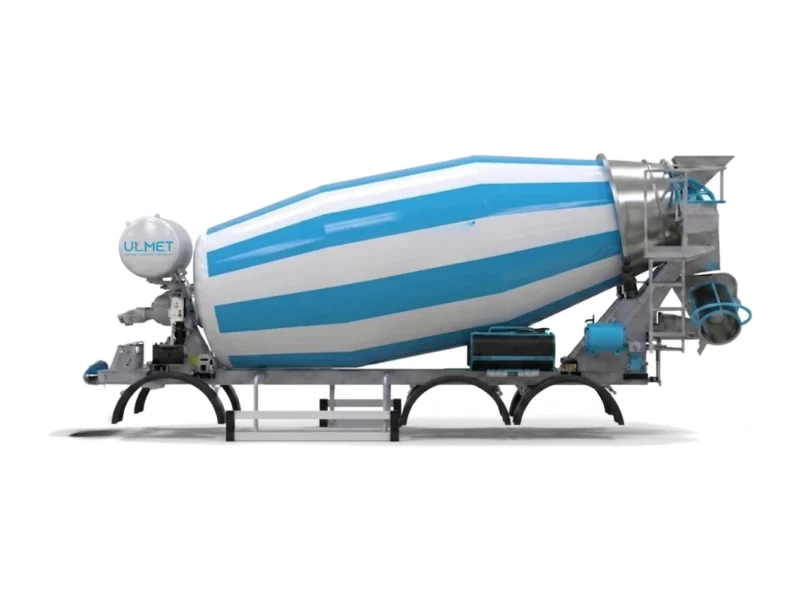

The drum is the biggest and hardest-working part of a truck mixer. Every day tonnes of concrete and aggregate turn inside it, wearing the shell and blades. This wear progresses slowly, which is why people often say “it’ll last a bit longer.” So when does it really need replacing?
How does a drum wear?
Wear concentrates most in the lower part of the drum, near the discharge opening, and on the blade edges. As blade height decreases, mixing becomes less effective, discharge slows and concrete starts to stay in the drum.
Signs it is time
- Discharge becoming noticeably slower
- Concrete left in the drum after every load
- Visibly reduced blade height
- Thinning, holes or cracks in the drum shell
- Frequently repeated weld repairs
Repair or replace?
Local wear can be dealt with for a while by reinforcing the blades and welding. But when the shell has thinned overall, repairs become more frequent, the vehicle spends more time in the workshop and each repair heralds the next. At that point a new drum can make more sense in terms of total cost.
When deciding, ask yourself: How many weld repairs in the last year? How many days was the truck in the workshop? How much longer does discharge take? The answers usually make the decision for you.
To extend drum life
- Wash after every load; our drum washing guide explains the steps.
- Use the drum at the right speed; see our drum rotation guide.
- Check rollers and the drum track regularly; see our roller guide.
Ulmet drums
At Ulmet we manufacture truck mixer drums and mixer parts in our own plant in Türkiye. See our drum and mixer category for drum and blade options, and truck mixer spare parts for all mixer body parts. Request a quote with your chassis and drum details and we will work out the right solution together.